 Reviews
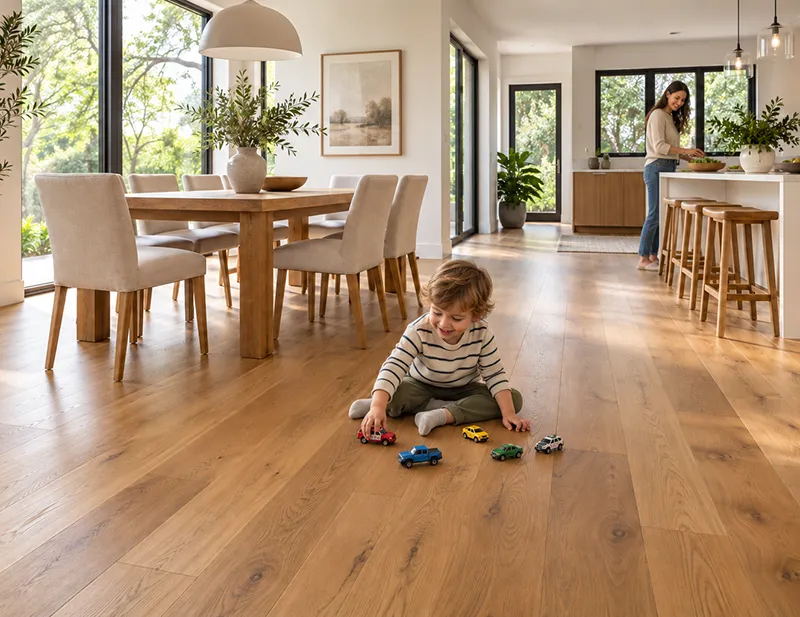
Sustainability is becoming an increasingly important consideration when homeowners choose flooring. But “eco-friendly flooring” can mean a lot of different things.
Is the product made from natural materials? Does it contain recycled content? How does it affect indoor air quality? Where did the raw materials come from? Can it be recycled when it eventually needs to be replaced? And perhaps most importantly, how long will it last?

At AJ Rose Carpets & Flooring, we believe sustainability is best viewed as the whole picture. There is rarely one flooring product that is automatically the most environmentally responsible choice for every home. Instead, homeowners should consider the materials, manufacturing process, indoor air quality, durability, maintenance requirements and what happens to the flooring at the end of its useful life.
Here are some of the most important things to consider:
Indoor Air Quality and VOCs
Most of us spend a significant amount of time indoors, so the materials we bring into our homes can have an impact on indoor air quality.
One term you may encounter when shopping for flooring is VOC, which stands for volatile organic compound. VOCs can be emitted by many household products and building materials, including certain flooring products, adhesives, finishes and coatings.
Fortunately, manufacturers have made significant progress in developing flooring systems with very low chemical emissions.
When indoor air quality is a priority, it is important to consider not only the flooring itself, but also adhesives, underlayments, carpet cushion, finishes and other installation materials that make up the complete flooring system.
Understanding Flooring Certifications
Environmental and indoor-air-quality claims can sometimes be difficult to evaluate. Terms such as green, natural, non-toxic and eco-friendly are often used broadly, so independent certifications and product transparency programs can provide more meaningful information.
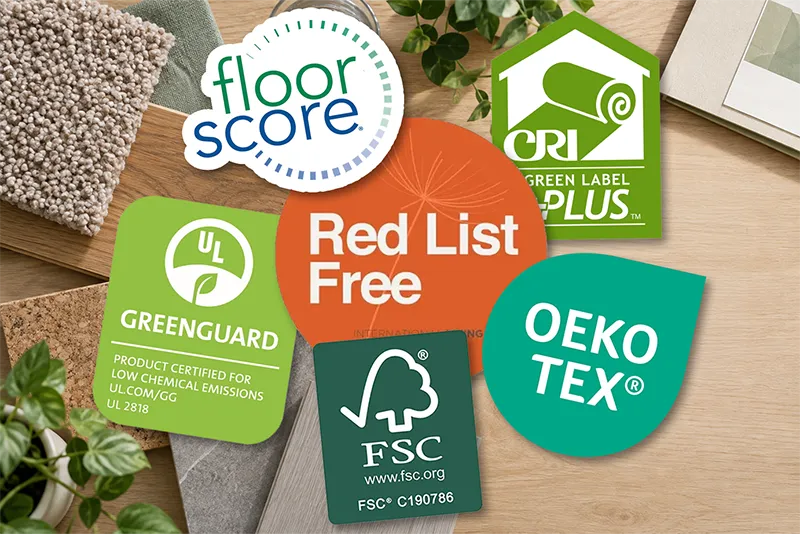
Here are several certifications and designations you may encounter when shopping for carpet and flooring:
CRI Green Label Plus
The Carpet and Rug Institute’s Green Label Plus program identifies carpet, carpet cushion and adhesives that have been independently tested for low emissions of volatile organic compounds (VOCs). It is one of the most widely recognized indoor-air-quality certifications in the carpet industry.
FloorScore®
FloorScore is an indoor-air-quality certification commonly found on hard-surface flooring, including luxury vinyl, laminate, wood, tile and other resilient products. Certified products are independently tested for VOC emissions and must meet established indoor-air-quality standards.
GREENGUARD Certification
GREENGUARD certification indicates that a product has been tested for chemical emissions and meets limits designed to support healthier indoor environments. You may also see GREENGUARD Gold, which applies more stringent emissions requirements and is often used for products intended for schools, healthcare facilities and other sensitive environments.
Red List Free / Declare Labels
The International Living Future Institute maintains a Red List of chemicals and materials considered among the most concerning for human health and the environment. Products participating in its Declare transparency program can disclose their ingredients and, when they meet the requirements, may be designated Red List Free.
OEKO-TEX®
OEKO-TEX certifications are commonly associated with textiles and can be relevant to carpet and other textile-based flooring products. Certifications such as STANDARD 100 by OEKO-TEX® indicate that textile components have been tested for a wide range of potentially harmful substances. This can be helpful for consumers concerned not only about VOC emissions, but also about the chemical content of the materials themselves.
FSC® Certification
For hardwood and other forest-based products, Forest Stewardship Council certification helps identify wood sourced through responsibly managed forests and verified supply chains.
You may also encounter Environmental Product Declarations, or EPDs, which provide information about a product’s environmental impacts throughout its life cycle, including raw materials, manufacturing and other stages.
No single certification tells the entire story. A product may perform very well in terms of VOC emissions while another stands out for responsible sourcing, material transparency, recycled content or end-of-life recyclability. Looking at several of these factors together provides a much clearer picture of a flooring product’s overall environmental and health profile.
Natural Flooring Materials
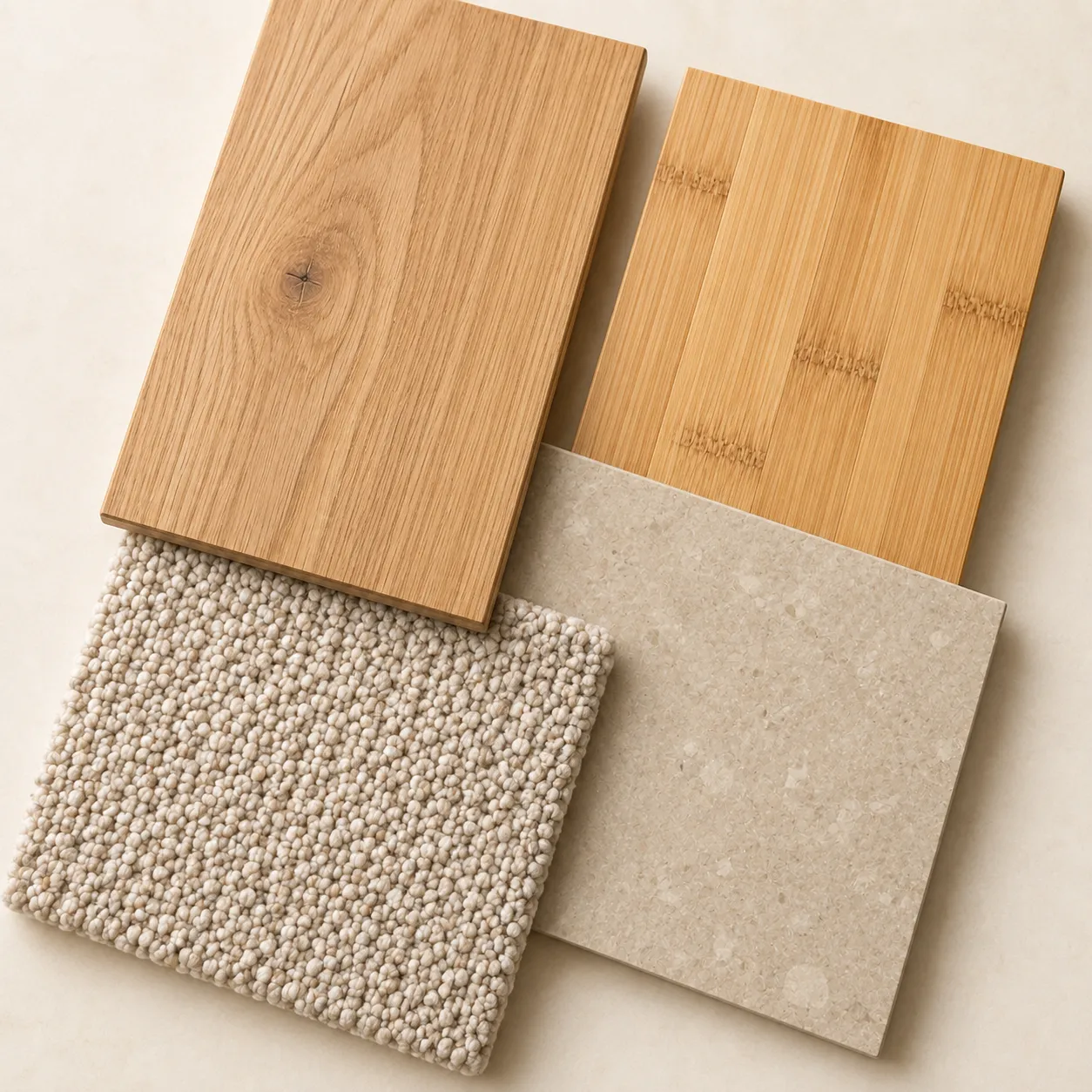
For homeowners interested in natural materials, there are more flooring choices than many people realize.
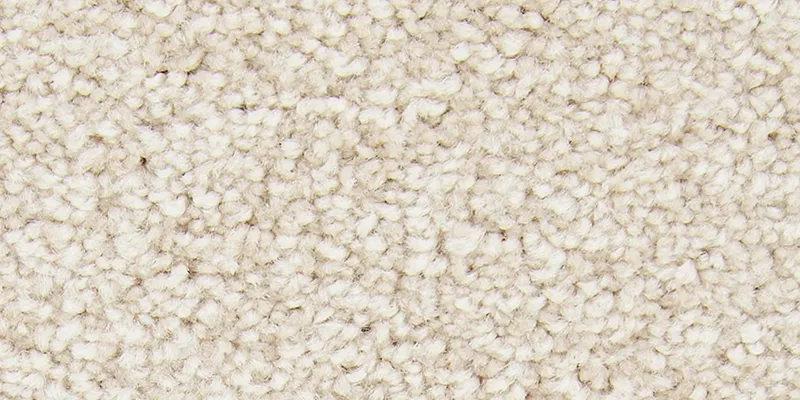
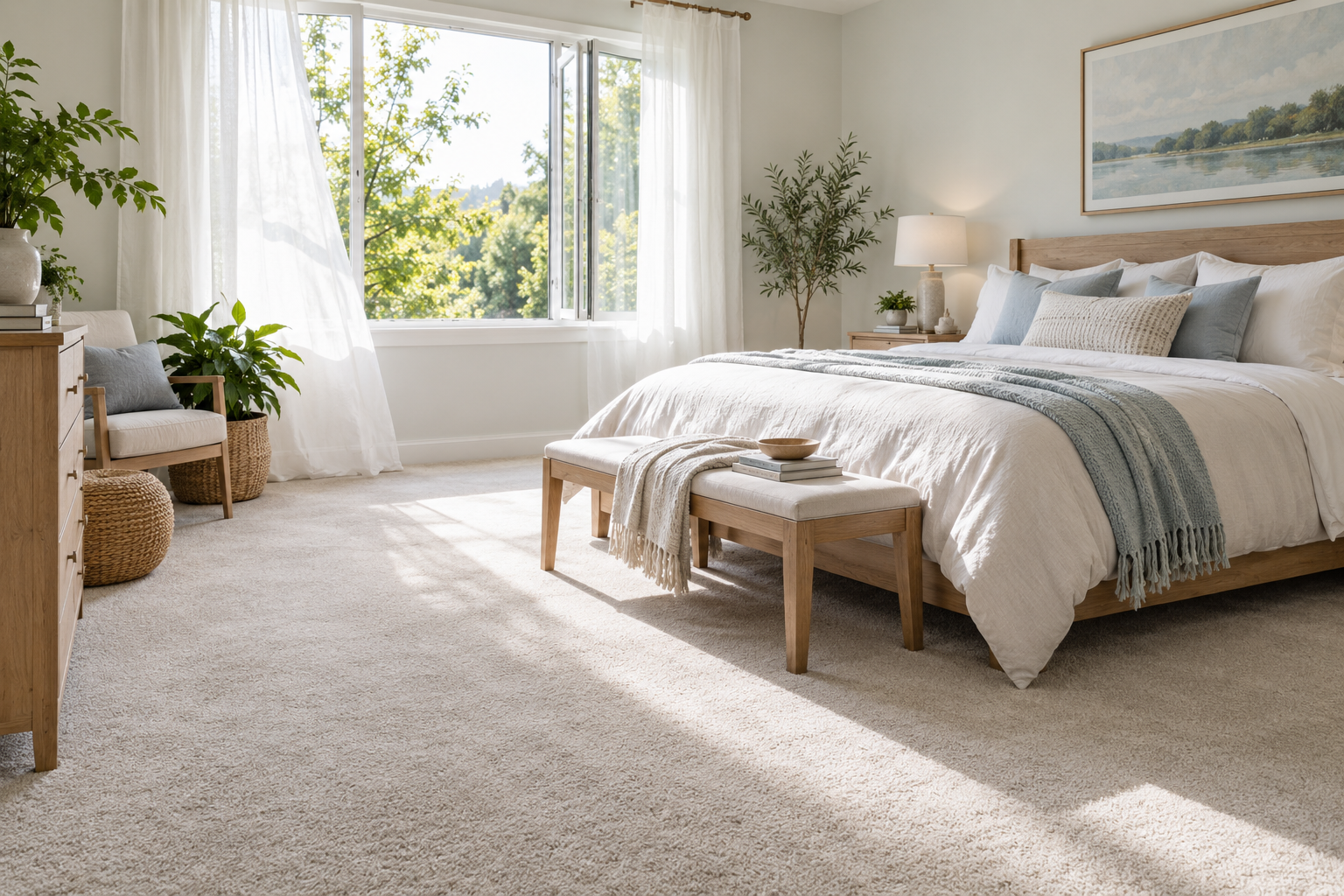
Wool Carpet
Wool is a naturally renewable fiber that has been used in carpeting for generations. It is durable, resilient, soft underfoot and available in a wide variety of styles.
Wool carpet can be an attractive option for someone looking to reduce the amount of synthetic material used in a room, although the backing, dyes and other components should also be considered when evaluating the entire product.
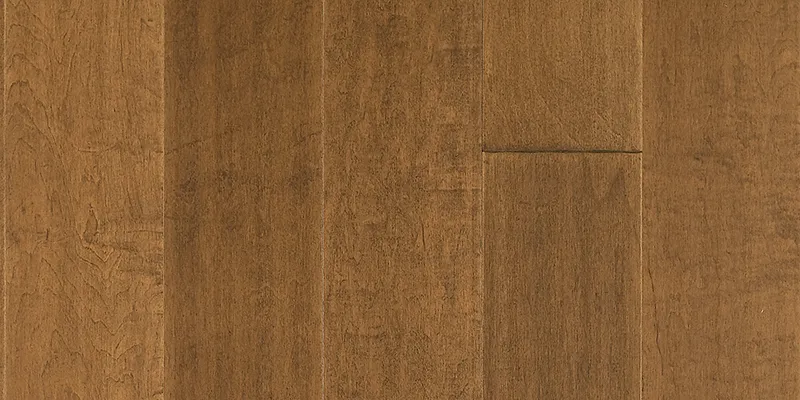
Hardwood
Real hardwood is another natural flooring material with an important sustainability advantage: longevity.
A quality hardwood floor can potentially remain in a home for decades, and many hardwood floors can be sanded and refinished rather than replaced entirely.
For homeowners concerned about forest management, FSC-certified wood products can provide additional assurance regarding responsible sourcing.
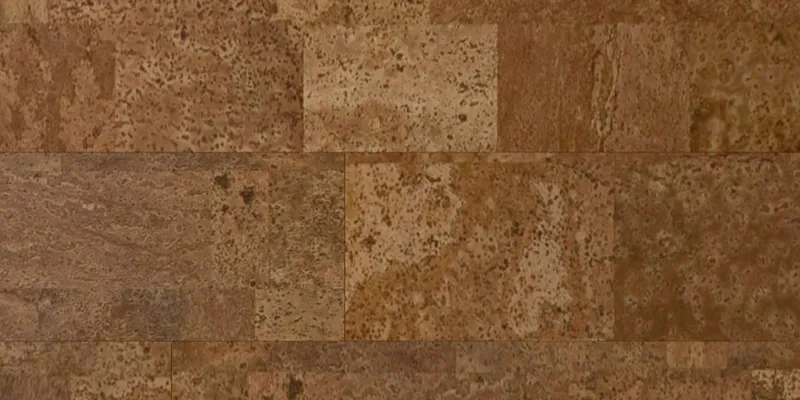
Cork
Cork flooring is produced from the bark of the cork oak tree. The bark can be harvested without cutting down the tree, making cork an interesting renewable flooring material. It also provides natural warmth and some sound absorption.
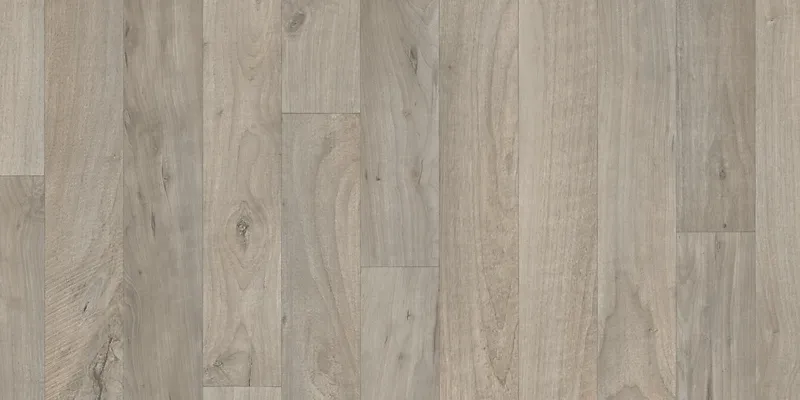
Linoleum
True linoleum should not be confused with sheet vinyl. Traditional linoleum is made primarily from materials such as linseed oil, wood flour, cork dust and other mineral or plant-based ingredients.
It can be a particularly interesting option for customers looking for a resilient floor with a significant proportion of naturally derived materials.

Other Natural Materials
Bamboo, sisal, seagrass and jute are other materials that may appeal to environmentally conscious homeowners.
However, natural does not automatically mean sustainable. Where a product comes from, how it is manufactured, how far it travels, what finishes are applied to it and how long it lasts all matter.
Let Us Help You Choose The Perfect Flooring
Talk with a flooring expert to find the perfect flooring material for your needs.
Recycled Content and Circular Manufacturing
Sustainability is not limited to natural materials.
Many modern flooring manufacturers are finding ways to incorporate recycled materials into their products. Depending on the product, this can include recycled carpet fiber, recycled backing materials, reclaimed wood or recycled content in resilient flooring.
Some manufacturers are also designing products around a more circular model. Instead of assuming flooring will eventually become waste, they are attempting to recover materials and use them again in new products.
This is an important distinction. A product containing recycled material is helpful, but an even bigger question is:
What happens to it when you are finished with it?
Carpet and Flooring Recycling
Old flooring can present an environmental challenge because many flooring products are made from multiple components that can be difficult to separate.
The carpet industry, in particular, has made efforts to improve the recycling and recovery of post-consumer carpet. Depending on the product and location, old carpet may be able to be diverted from landfills and processed so that portions of the material can be reused.
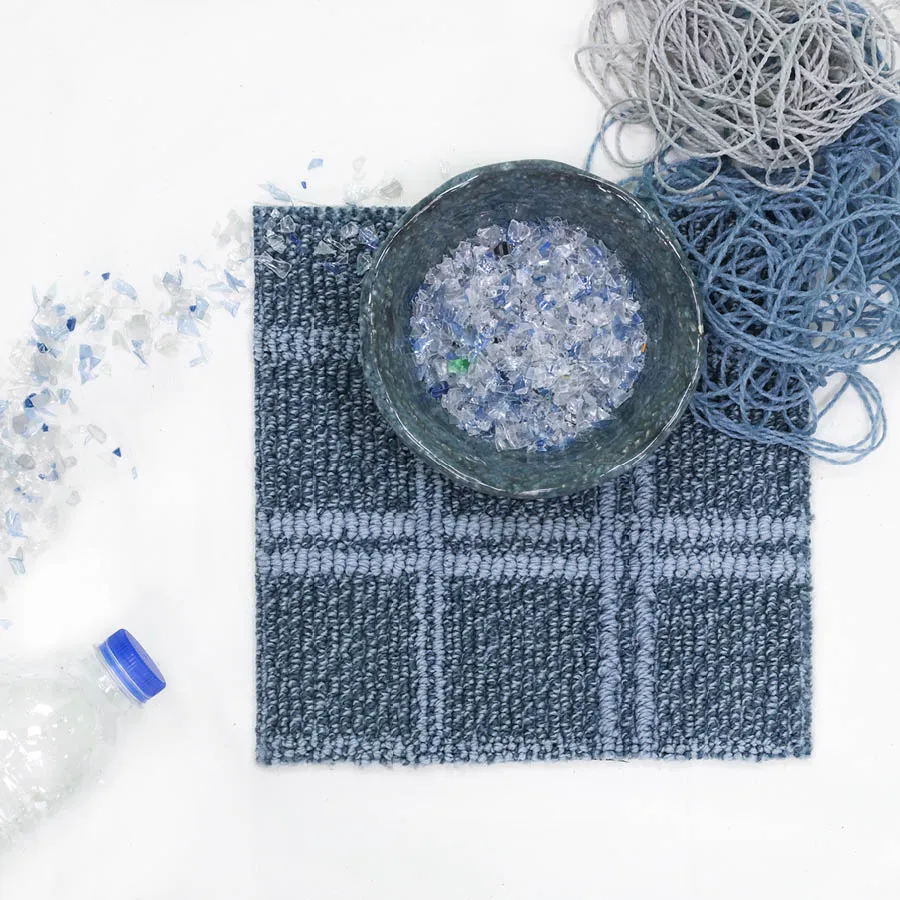
At AJ Rose Carpets & Flooring, we are able to divert used carpet and padding and keep it out of landfills.
Durability May Be the Most Important Sustainability Feature
One of the easiest sustainability factors to overlook is simply how long a floor will last.
Replacing an inexpensive floor several times can require considerably more raw material, manufacturing, packaging, transportation and disposal than purchasing a product that performs well for a much longer period.
That means the most sustainable flooring choice is not necessarily the product with the most environmental claims on its label.
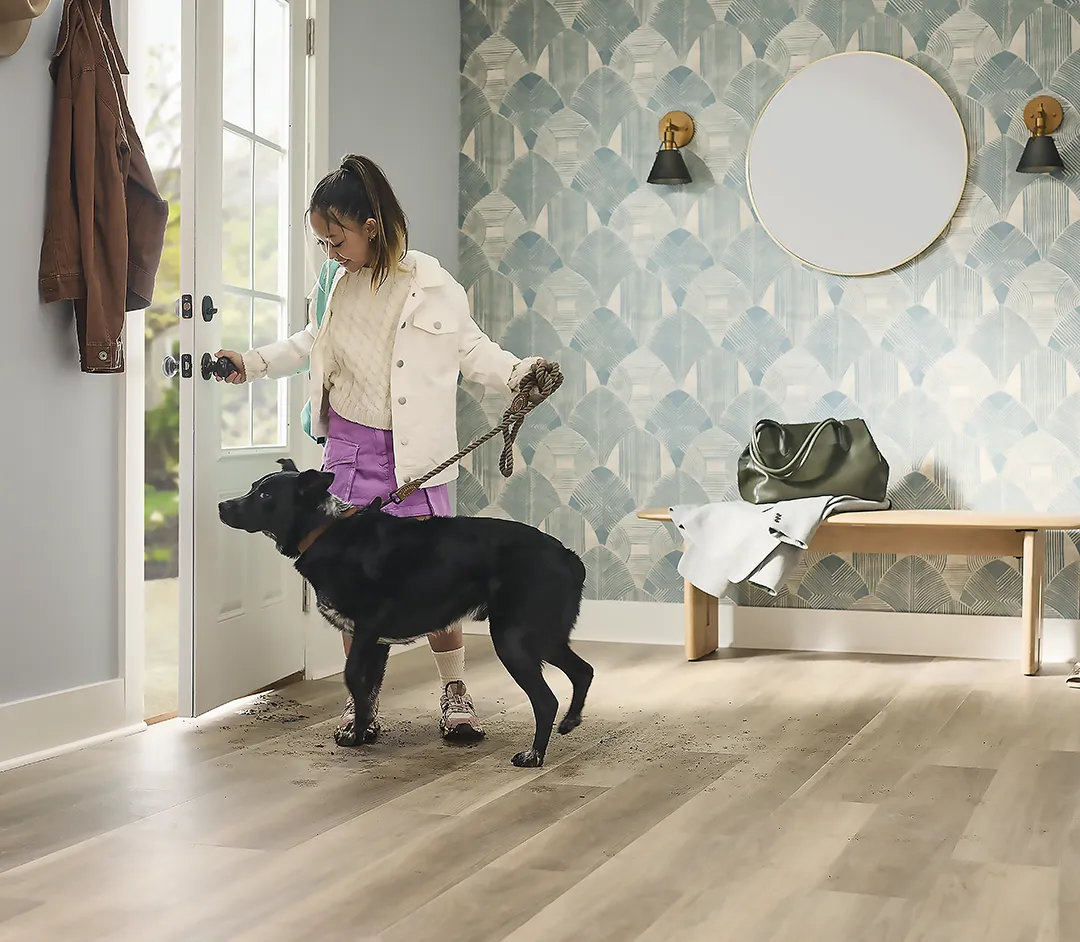
Which environmentally responsible product is also appropriate for the way this room will actually be used?
A beautiful natural product that fails prematurely because it was installed in the wrong environment is not a sustainable solution.
Traffic level, pets, children, moisture, sunlight, maintenance requirements and expected lifespan.
Choosing the right flooring for the application can dramatically extend its useful life.
Installation Matters Too
The environmental impact of a flooring project does not stop with the flooring itself.
Adhesives, floor-preparation materials, underlayments, carpet cushion, finishes, moisture-control products and packaging.
Low-emitting installation products may be particularly important for homeowners concerned about indoor air quality.
Accurate measuring also matters.
Proper estimating can help reduce unnecessary material waste while still allowing enough material for appropriate installation, pattern matching and future repairs.
Explore Flooring for Every Need
Find the perfect combination of comfort, performance, and style.
Maintenance Has an Environmental Impact
Think about what will be required to maintain the floor for the next 10, 20 or even 30 years.
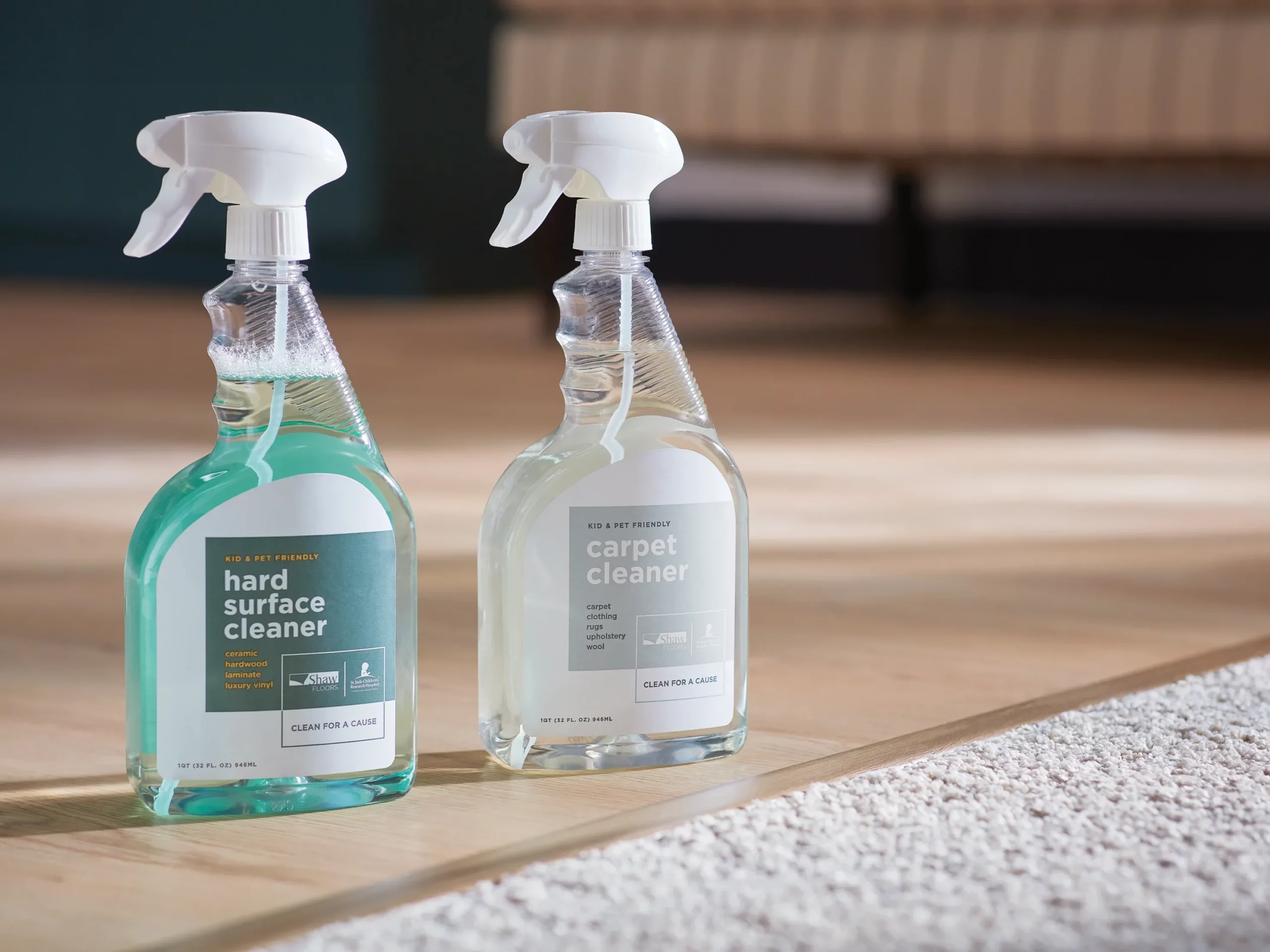
Some flooring requires specialized cleaners, coatings or periodic refinishing. Others can be maintained primarily through vacuuming and routine cleaning.
A product that lasts longer and can be maintained without frequent replacement may have environmental advantages that are not immediately obvious when comparing samples in a showroom.
Look Beyond the Product Itself
For customers who want to take a deeper look at sustainability, there are several additional questions worth asking:
Where was the flooring manufactured?
Does it contain recycled or renewable content?
Is the wood responsibly sourced?
Has the product been independently tested for emissions?
Does the manufacturer provide information about the ingredients and materials used?
Can the flooring be repaired or refinished rather than replaced?
Does the manufacturer have a recycling or take-back program?
What happens to the flooring at the end of its life?
These questions help move the conversation beyond a simple “green” label.
There Is No One Perfect Sustainable Floor
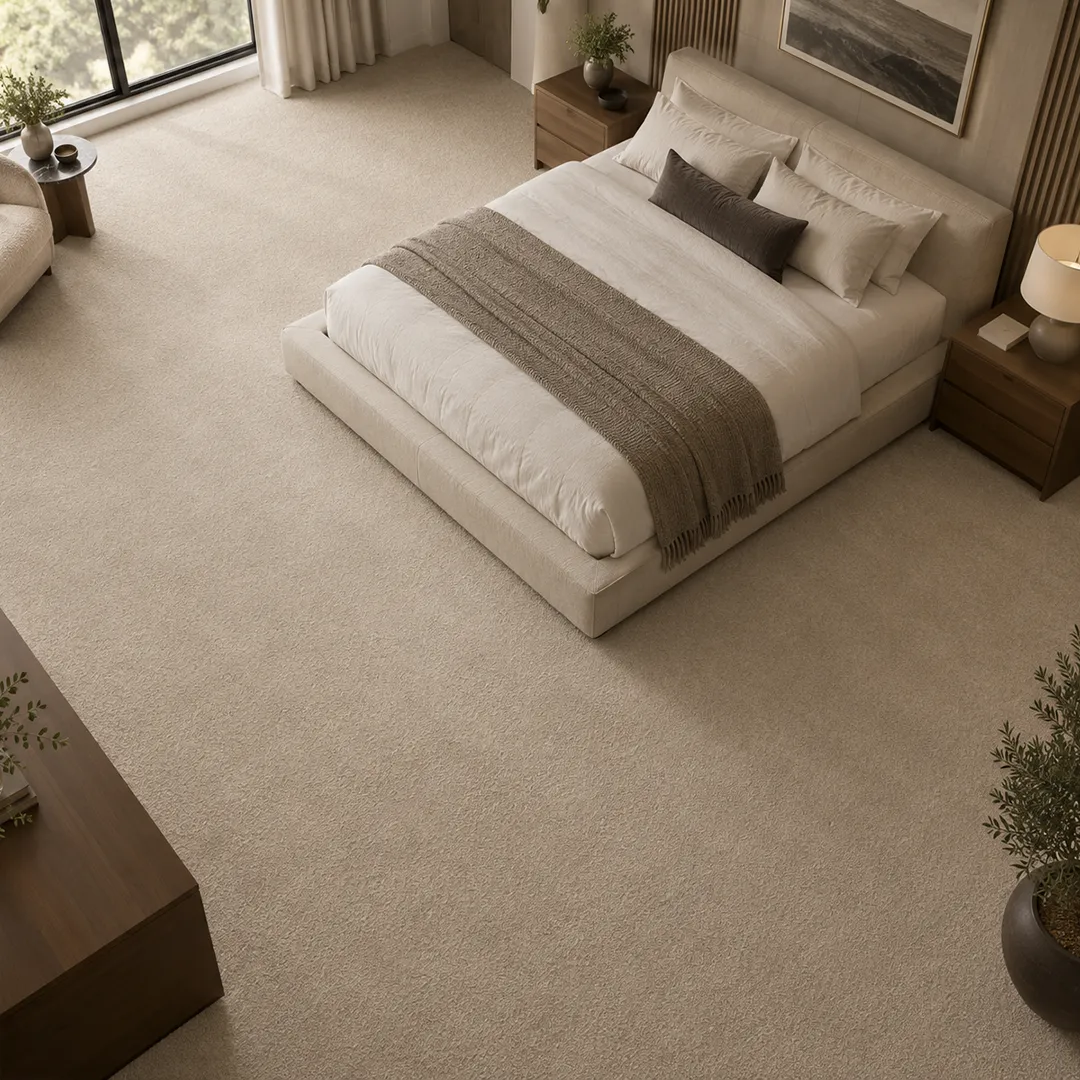
A homeowner choosing wool carpet for a bedroom may have completely different priorities from someone selecting waterproof flooring for a busy mudroom.
Likewise, a commercial customer replacing thousands of square feet of carpet tile may place significant importance on recycled content and manufacturer reclamation programs, while a homeowner choosing hardwood may prioritize responsible forestry and the ability to refinish the floor decades from now.
The goal is not necessarily to find a flooring product with zero environmental impact. That is unrealistic.
The goal is to make a more informed choice by considering health, materials, manufacturing, durability, maintenance and end-of-life together.
Let AJ Rose Help You Find the Right Flooring
There are now more sustainable flooring options available than ever before, from natural wool carpet and responsibly sourced hardwood to low-emitting carpet, resilient flooring and products incorporating recycled materials.
The challenge is understanding which features actually matter for your particular home.
At AJ Rose Carpets & Flooring, our team can help you compare flooring products based not only on appearance and price, but also on durability, indoor air quality, materials, certifications and environmental considerations.
If sustainability is important to your flooring project, tell us when you visit one of our showrooms or schedule an in-home consultation. We can help you explore products that fit both your home and your priorities.