

 Reviews

Traditional Foyer Styling: Layered Area Rugs and Runners for New England Center Halls
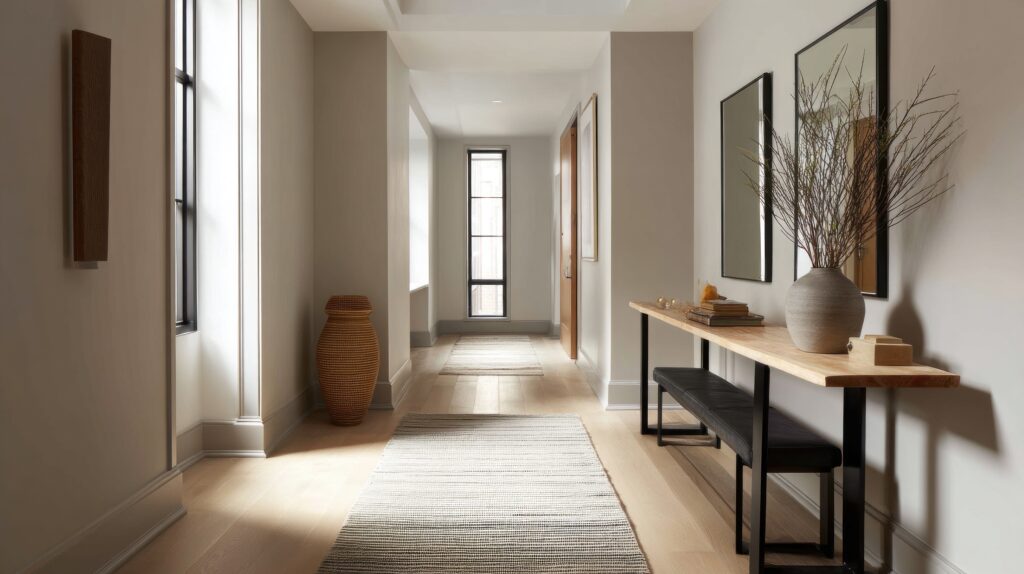
Front doors in classic New England center-entrance Colonials open directly into the heart of the home, rarely offering the buffer of a modern suburban mudroom. In neighborhoods throughout Belmont, Newton, and Brookline, guests step straight off the front porch onto original narrow-strip oak or wide-plank historic floors. November kicks off months of steady holiday gatherings, Thanksgiving dinners, and wet late-autumn weather, putting immense pressure on these central entryways. Layering a resilient flat-weave area rug with a rich vintage runner protects original floorboards from tracked-in wet leaves and grit while honoring classic architectural woodwork.
This layered approach solves the physical dilemma of historic foyers: finding one covering that handles heavy traffic without hiding the beauty of the surrounding room. A large, neutral base defines the entry perimeter, while an ornamental runner directs foot traffic straight down the hall toward the kitchen or main staircase.
Low-Profile Base Area Rugs for Tight Door Clearances
Historic front entries across Eastern Massachusetts often feature original exterior doors hung low to the floorboards. Thick tufted rugs catch on the door sweep every time you welcome a guest, bunching up the rug and letting cold air into the hall. Your foundation area rug needs a flat, tightly woven profile that allows exterior doors to swing freely while standing up to gritty seasonal foot traffic.
Natural Plant Fiber Weaves
Sisal stands as one of the most durable natural fibers available for active residential spaces. Its coarse, tight structure acts like an indoor boot brush, scraping fine dirt and moisture off shoe soles before visitors step deeper into your home. The pale honey and wheat tones of natural sisal harmonize with aged pine, dark walnut, and natural white oak floors, offering an understated backdrop that feels right at home alongside traditional wainscoting and painted trim.
Tightly Woven Flat-Weave Wool
Wool brings natural soil resistance and underfoot resilience to high-traffic hallways. Natural oils in sheep wool make the fibers naturally resistant to light moisture, giving you ample time to blot spills or damp footprints during a party. A thin, looped wool area rug in soft heather gray, oatmeal, or muted cream softens footsteps on creaky historic floorboards without adding awkward height at the threshold.
Sizing and Visual Proportions for Narrow Center Halls
Traditional center-hall floor plans feature sightlines that run directly from the front door through to the back of the house, often framed by a central staircase and formal door casings. Layering rugs in these defined spaces requires careful attention to scale so the entryway feels deliberate rather than cluttered.
Framing the Runner
To achieve a balanced look, your base area rug should fill the main entry landing, leaving roughly eight to twelve inches of exposed hardwood along the baseboards. Center your decorative runner directly on top, leaving at least four to six inches of the neutral base rug visible on both sides. This creates a clean frame that draws the eye down the length of the hall while visually widening a long, narrow entryway.
Vintage Patterns for High Traffic
Detailed Persian, Heriz, and Turkish motifs in deep indigo, madder red, and warm terracotta complement traditional New England architectural millwork. Beyond their classic aesthetic, these intricate historical patterns excel at disguising the inevitable stray autumn leaf or faint damp footprint during large family gatherings. Pairing this detailed visual interest with a plain sisal or wool base keeps the pattern focused along your walking path rather than overwhelming the entire foyer.
Stability on Hardwood Floors
Layering two textiles on finished wood surfaces calls for proper grip to prevent shifting and bunching as guests walk through the hall. Place a dedicated rug pad beneath your base area rug to protect your floor’s finish and lock the foundation in place. Use a specialized carpet-to-carpet pad between the base rug and your top runner to keep the edges flat, prevent corner curling, and eliminate tripping hazards during busy holiday open houses.
Choose the Right Area Rugs for Your Front Entryway
Evaluating rug textures, pile heights, and color pairings is much simpler when you can see physical samples side by side against your own woodwork. Our family has guided Eastern Massachusetts homeowners through custom flooring and design choices since Andy Sr. and Rose Ann founded our business in 1977. John and AJ lead that mission today across Greater Boston, the North Shore, and MetroWest, helping families balance timeless historic style with practical, daily durability.
Visit any of our five expansive showrooms in Burlington, Natick, Needham, Lynnfield, or Belmont to examine natural fiber textures, compare runner patterns, and test sample thicknesses in person. You can also book our mobile shop-at-home service to view sample combinations right in your front foyer under your home’s natural daylight and interior fixtures. We back every project with an A+ BBB rating and thousands of positive reviews from local neighbors throughout the region. Please contact us today to plan your entry design or schedule a personalized showroom consultation.